Rebirth of a Semiconductor Manufacturing Facility

Industrial demolition is the dismantling of structures or facilities used in the production of a wide variety of “goods” and services. These projects are conducted at water treatment plants, manufacturing facilities, food and beverage sites, and more. Careful consideration should be taken in choosing a demolition and abatement subcontractor partner as complexities exist that can keep a successful project from within time and budget constraints. Below is an example of a recent Precizion project at a semiconductor manufacturing facility that highlights these complexities.

The Facility

A large semiconductor manufacturing facility in California, built in the mid-80s, recently changed ownership in an acquisition. The new owner purchased the facility with the goal of upgrading it to a new industry-specific fabrication facility to enable state-of-the-art manufacturing; this includes modern tooling, equipment, and technology. The initial stage of the facility’s rebirth required a demolition and abatement expert. 

The Opportunity 

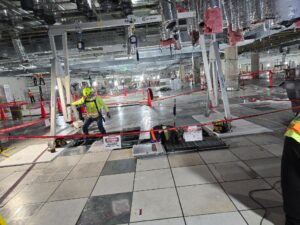
This renovation project required major selective demolition of the fabrication floor, sub-fab, clean room, energy center, return air plenum (RAP), outdated equipment, tooling, and all the support systems that go along with it (electrical, mechanical, structural, etc.).  It also included the demolition and removal of contaminated materials and hazardous waste (i.e., contaminated chemical lines and piping). This project required remediation specialization due to the danger these hazardous contaminants pose to humans and the environment, as well as the strict regulations required to handle and dispose of them.  

These requirements were the foundation upon which the future facility would be built. A contractor was needed with the expertise and experience to handle both the demolition and remediation requirements simultaneously. Projects like this can often stall when newly discovered contaminated material is found as the project unfolds, causing delays and preventing subcontractors from meeting the strict timelines.  The timeline for this project was 4 months.  

The Challenge

The renovation of the manufacturing facility was a design-build project. At the time this project was awarded to Precizion Partners™, much of the project was still in the planning and design phase with many decisions and parameters yet to be finalized. As with any major renovation, creating a plan of action and getting started can be the most challenging part. The team worked backwards from the customer’s operational target date to create a tight and challenging demo schedule with strict timelines to keep the project on track.   

However, the scope of the design-build project blossomed quickly as new projects (i.e., the addition of electrical work and the clean room, to name a few), challenges, and unforeseen roadblocks were encountered. A corresponding increase in the timeline was not permitted. This required immediate scaling of personnel and a fast ramp of job and safety training to ensure time commitments were met. Due to some of the hard-to-access confined spaces and specific chemical compounds, the team also needed to invest in new tools to complete the job safely and efficiently. 

Leadership knew that frequent collaboration and communication with the various project stakeholders (head of facilities, industrial & environmental manager, internal construction group, etc.) would be critical. Precizion and the client instituted weekly and bi-weekly meetings to ensure knowledge was shared, creative and efficient workarounds were developed, and additional research was conducted. 
The Solution 

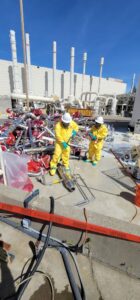
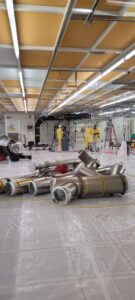
The project entailed leveraging in-house experts to guide the remediation team in the safe identification, tag-off, cutting, and removal of contaminated materials (i.e., piping), as well as the containment or decontamination of the material before specialty haulers took it to a disposal facility designated to receive these types of contaminants. Constant testing was conducted to identify, educate, and remediate dangerous materials, including various heavy metals, acids, caustics, and solvents.  
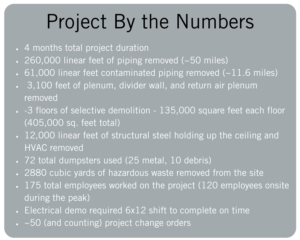
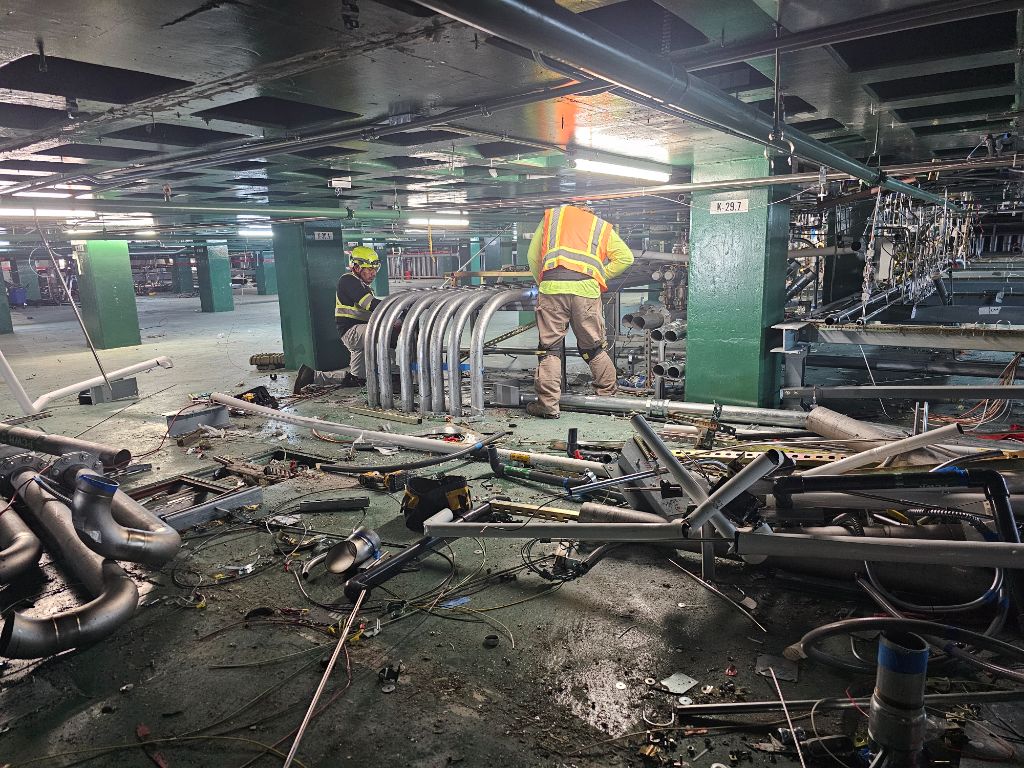
The demolition team often worked alongside or close behind our remediation team to do much of the heavy lifting, which helped the project run efficiently and on-schedule. The demolition team conducted substantial selective demo of three floors of piping and materials from the fab, RAP, energy center, and sub-fab (where the mechanical and electrical systems that support the cleanroom are located). Precizion’s foremen often used ingenuity and creativity to get workers into tight locations to remove and haul out the materials.

People resources were the wildcard that Precizion Partners needed to solve. As the scope of the project quickly expanded, so did the need for workers to complete the extensive tasks.  The company ramped up through weekly hiring sessions and set up daily training sessions for onsite personnel to accommodate the scope and timeline. In addition, the results of the safety training sessions, and the onsite presence of the safety team were impressive, with zero recordable safety incidents. 

Precizion Partners’ vast experience in the industrial demolition and remediation space enabled us to handle some of the unique situations, and in some instances, pivot quickly to bring experts on board to help solve the problems. For example, known contamination levels changed as additional surveys came in. Precizion Partners hired a Certified Industrial Hygienist (CIH) to provide guidance and training on specific hazardous materials while also certifying the safety documentation. 

The synergies between W.C. Maloney and PALS were critical for the tight sequencing of jobs, and it enabled consistent sharing of information during the weekly and impromptu meetings with the customer.  

Choosing Your Industrial Demo Subcontractor

Industrial demolition projects often provide unique challenges due to the complexity of the facilities and existing conditions. Choosing a partner with demolition and abatement capabilities in-house can lead to project and communication synergies that result in more seamless integration of the myriad of tasks and overall shorter timeframes for completion.


Choosing a Hazardous Materials Remediation Company

Choosing a Hazardous Materials Remediation Company 

General contractors (GCs) have a plethora of projects that entail renovating or tearing down older buildings. These GCs are in need of quality, accredited remediation companies as partners to ensure they are following all rules and regulations, as well as doing the work in a safe and environmentally sound manner.   

Below is a quick guide to help general contractors and those in the private sector make an informed decision when choosing a hazardous materials remediation company to work with. 

9 Tips for Choosing a Hazardous Materials Subcontractor 

The list below covers the critical things to think about when choosing a hazardous materials contractor partner.   

1. Industry Certification and Licensing 

Any remediation company you work with must have obtained the proper education and training in abating hazardous materials. This means they have all the necessary certificates and licenses that a contractor must have in order to perform remediation services. Proof of these certificates and licenses should be readily available from any reputable partner.  

For starters, the contractor you choose should be licensed through the Contractors State License Board (CSLB) with the following classifications: 

  • C-22 – Asbestos Abatement: Describes how an “asbestos abatement contractor performs abatement, including containment, encapsulation, or removal, and disposal of asbestos containing construction materials, as defined in Section 6501.8 of the Labor Code, in and on buildings and structures.” Ensures that all work performed, and all documentation prepared by an asbestos abatement contractor, is done in accordance with regulations and requirements of the Department of Industrial Relations’ Division of Occupational Safety and Health (DOSH). 

With respect to hazardous material certifications, the following are important to have: 

In California, it is also required that any person transporting hazardous substances must hold a valid registration issued by the Department of Toxic Substances (DTSC). 

It’s also worth checking to see if they’re registered with government agencies at both the state and federal level. This adds an extra level of legitimacy to the firm. For example, here are some you’ll find for PALS: 

2. Industry Experience and Expertise 

There is no substitute for choosing a partner with experience. The abatement of hazardous materials is a perilous task – make sure they know what they’re doing, and have done it before. 

For instance, when asbestos is disturbed, microscopic fibers are released into the air. If inhaled, these fibers could pose severe health risks, including lung cancer, asbestosis, and mesothelioma. A seasoned remediation contractor possesses the specialized knowledge and training necessary to conduct thorough assessments, develop meticulous removal plans, and employ precise containment measures to minimize the dispersion of asbestos fibers. They are equipped with the appropriate safety gear and advanced equipment, as well as follow stringent regulatory guidelines, to ensure the safe and effective removal of this hazardous substance. 

A great indicator of experience is if the firm offers a diverse range of remediation services. For example, at PALS we offer: 

  • Asbestos abatement 
  • Lead abatement 
  • Mold abatement 
  • Soil remediation 
  • Hazardous waste management 
  • Underground Storage Tank (UST) removal 

Experience Coordinating with General Contractors 

Most of PALS’ remediation projects are in concert with a construction General Contractor concerning a demolition or renovation project. Complex timelines are planned out and the asbestos or lead remediation component is often at the beginning of the project. We have heard countless times that it is invaluable for the remediation partner to have extensive planning meetings prior to the creation of work plans. It is critical that the remediation partner helps the general contractor troubleshoot unforeseen situations ahead of time so they know the risks to look out for. 

Most GCs do not know the ins and outs of hazardous materials remediation. They need help understanding the intricacies and nuances of a particular job and how they impact a particular situation. That is why it is crucial to find a remediation company who can provide insight for testing professionals or to other agencies in charge of the project.  

3. Safety Protocol Compliance 

Safety protocols and compliance are paramount for any hazardous materials contractor, ensuring the well-being of both workers, the jobsite teams, and the environment. Rigorous adherence to established safety measures is non-negotiable, beginning with comprehensive risk assessments and hazard identification prior to commencing any project.  

Find a partner known for meticulous planning for the containment, removal, handling, and disposal of hazardous materials. Remediation specialists ensure everyone is wearing the appropriate personal protective equipment (PPE) for workers and that regular training and drills are conducted to foster a culture of awareness and preparedness, ensuring that every member of the team is well-versed in emergency response procedures and knows the inherent dangers of non-compliance. 

It is important that the asbestos abatement team company stays abreast of local, state, and federal regulations; this is imperative as non-compliance can lead to severe legal repercussions and, more importantly, jeopardize the health and safety of all involved parties. California has rigorous regulations surrounding hazardous materials and they change often. A hazardous materials contractor must be unwaveringly committed to upholding the highest standards of safety and compliance throughout the entirety of their operations.  

4. Insurance and Liability Coverage 

This is an easy one. Before partnering with any remediation service, a general contractor must ensure that the subcontractor has the appropriate levels of insurance and liability coverage. This protects both the general contractor and the remediation company in the event of accidents or unforeseen circumstances.  

But don’t just ask if they have insurance; confirm what types of insurance they have, and what each covers. Different scenarios require different types of insurance. Without them the GC may be held liable.  

5. References and Testimonials 

Many companies claim to have experience with the abatement of asbestos and other hazardous materials, but it is another thing to have those claims validated. Most remediation companies should have a large list of references who will stand behind their previous work and give you an honest testimonial about the capabilities, safety approach, timeliness, and general knowledge of a partner.  

6. Customer Service and Communication 

Good communication and customer service is not always a given. Ensure your remediation partner excels at both, as they are critical components of a successful completion of a project. Find a partner who answers the phone right away (and doesn’t send you to a lengthy automated phone tree). They should be responsive to both simple and complex questions. They should value communication and provide regular updates. 

Projects seldom go exactly as expected and problems often arise that need immediate troubleshooting. Any abatement company should be ready to jump in and help find a solution with great customer service. 

7. Environmental Responsibility 

Find a hazardous materials remediation subcontractor whose company culture prioritizes environmental responsibility and sustainability. The company should ensure their practices are sustainable and environmentally conscious and make every effort to incorporate that into all their actions. Cleaning up the world is a difficult mission so find a partner who believes in the future. 

Why Choosing the Right Remediation Specialist is Important 

Although asbestos is fireproof, and heat and chemical resistant, and was even considered a “miracle” product in the early 1900s, it is now known as one of the most dangerous construction substances. In response, the EPA has established several asbestos laws and regulations. 

The EPA has similar laws and regulations pertaining to lead. Notably, the EPA requires that any renovation, repair or painting projects that could potentially disturb lead-based paint in buildings including homes, childcare facilities and preschools built before 1978 be performed by lead-safe certified contractors, like us. 

Like asbestos and lead, all hazardous materials are now governed by strict regulations. These warnings exist to ensure hazardous materials are managed with care. That is why it is so important to choose the right hazardous waste remediation specialist for your project. 

To learn more about the process, visit our hazardous waste remediation page. 

The Dangers of Asbestos

Asbestos is synonymous with danger and health risks, especially in the workplace. Here are some quick facts showing just how dangerous asbestos can be:  

Let’s take a closer look at asbestos, and explore what ways we can avoid dangerous exposure. 

What is Asbestos?

Asbestos is a naturally occurring mineral composed of thin, durable, microscopic fibers. At one time, asbestos was considered a “miracle mineral.” 

Known for its highly-effective resistance to heat, electricity, chemicals and corrosion, and as an acoustic insulator, asbestos was a popular additive to thousands of construction and manufacturing products throughout the 1900s. (The term “asbestos” comes from the Greek word “amiantos,” which translates to “inextinguishable.”) 

Despite its benefits for construction and manufacturing, asbestos is widely considered an extremely dangerous, hazardous material. 

A Brief History of Asbestos in the U.S.

Mining for asbestos started in 1894 and grew to its height in the United States in the late 1960s and early 1970s. California has some of the largest naturally occurring asbestos deposits in the world, where it is found in ultramafic and serpentine rock, often near fault zones. As such, the state had the highest concentration of asbestos mining in the country, with the Calaveras mine in Copperoplis being the biggest producer during the 60s and 70s. 

By then the dangers of asbestos were becoming obvious as the causal link between asbestos and cancers and health risks such as mesothelioma was mounting. The Environmental Protection Agency (EPA) banned several types of asbestos in the mid-70’s due to concerns over the health effects associated with exposure to such materials. Subsequent strict federal asbestos regulations helped diminish its use and risks, causing the mining of asbestos to decline until its complete end when the last asbestos mining operation closed in California in 2002.  

However, despite a dramatic decline since, and the creation of strict exposure standards, the use of all asbestos is not legally banned in the United States, like it is in many other countries around the world. 

How Dangerous is Asbestos?

Asbestos is very dangerous due to the durable microscopic fibers it releases when disturbed. When those fibers are inhaled it can lead to serious health risks. 

Prolonged exposure to asbestos fibers has been linked to life-threatening illnesses, such as: 

  • Lung cancer 
  • Mesothelioma (a cancer attacking the tissue lining internal organs) 
  • Asbestosis (an asbestos-specific chronic lung disease) 

When is Asbestos Dangerous? 

Most asbestos is not hazardous when it is in its natural state. It is only dangerous when it is disturbed and releases asbestos fibers into the air, creating the potential for fibers to get inhaled into the lungs. 

After becoming airborne, some fibers may be trapped by the mucous membranes of the nose and throat and removed if exposure is known. However, the true health problems occur when the fibers pass deep into the lungs, or are swallowed, and enter the digestive tracts. This may lead to health concerns decades in the future. 

Asbestos is most hazardous when it is “friable”, meaning that it is in a state that can be crumbled by hand and thus releases fibers into the air. 

For example, sprayed-on asbestos insulation is highly friable, whereas asbestos occurring in floor tile is not. 

It is important to note that asbestos containing building materials such as ceiling and floor tiles, cabinet tops, roof or siding shingles, will generally not release asbestos fibers unless they are damaged or otherwise disturbed in some way. If the fibers are not released into the air, the danger is minimized. 

How to Prevent Dangerous Exposure to Asbestos

Asbestos is not to be messed with. Since asbestos can be found in almost any home and commercial property built prior to 2000, it is crucial to prevent dangerous exposure to asbestos by taking various precautionary measures. 

The only truly safe way to do so is work with a remediation expert trained in asbestos abatement (the containment and removal of asbestos). 

The process of safe asbestos abatement typically includes: 

  1.  Identify asbestos-containing materials 
  2. Wear protective gear and respiratory protection 
  3. Follow asbestos removal regulations 
  4. Minimize disturbance to asbestos materials 
  5. Properly dispose of asbestos waste per code 
  6. Conduct regular air monitoring on-site 
  7. Provide medical monitoring for at-risk workers 

Avoid any DIY removal of asbestos. 

If you suspect the presence of asbestos — whether you’re a homeowner, business employee or construction tradesman — do not take measures into your own hands. Avoid touching the material as much as possible and isolate the area. If you can capture a small sample safely, without causing it to crumble, then you can send it to be tested by a qualified laboratory.  

But your best option will always be to call an accredited asbestos inspector to handle the identification, sampling and testing for you. 

Asbestos is classified as a hazardous material and should be treated like any other. It’s essential to take asbestos-related risks seriously and follow all safety guidelines and regulations in areas where asbestos may be present. 

Asbestos in the Construction Industry

Because of its “indestructible” nature, asbestos was considered inherently valuable to a wide variety of manufactured products. The construction industry is rife with examples of homes and buildings erected throughout the 20th century using asbestos. This includes an exhaustive list of construction materials, including:  

  • Cement 
  • Furnace or pipe coverings 
  • Insultation 
  • Ceiling Tiles 
  • Fireproofing materials 
  • Drywall 
  • Roofing 

As regulations tightened and knowledge of the health risks of asbestos grew, asbestos materials were no longer allowed to be used as standard construction material. That bodes well for the elimination of hazardous materials in new buildings. However, many older homes, schools, and buildings still have asbestos materials which can become airborne during a renovation or demolition process.  

Considering that these older buildings still pose risks to the occupants, the asbestos remediation business is critical to the safety and well-being of the public and construction teams. 

Remediation companies must follow stringent safety and compliance protocols for everything from the surveying of the buildings to demolition rules and disposal of hazardous materials. Remediation partners must be chosen wisely for this immensely important job of keeping our people and environment safe. Visit our Remediation page to learn more about our asbestos removal services for the commercial space. 

Sources: mesothelioma.com, California Air Resources Board. 

Tips for Worker Safety in Demolition and Remediation

Emphasizing worker safety in the demolition and abatement industries is critical for a company’s success and reputation. We’ve compiled a demolition safety checklist to ensure that success and show what steps we’ve taken at Precizion to promote the safety and continued wellbeing of every team and project. 

Whether you’re hiring for a project, or part of a company doing the work, it’s important to know the safety measures demo and remediation businesses need to follow to keep workers safe. 

Why Following Demolition Safety Standards is Important

Demolition workers face numerous risks in their day-to-day activities, from exposure to environmentally hazardous materials (like asbestos, silica, lead and mold) to working at heights and in confined spaces. Add to that the fact that demolition can generate significant amounts of dust, noise and debris and you can see that creating, implementing and monitoring an extensive safety plan is paramount to reduce the health risk. 

Ensuring the safety of workers and providing continued safety training not only protects their physical health but also contributes to their mental wellbeing and job satisfaction. This is not only vital for the workers but has the added benefit of optimizing project completion and ensuring the safety of other non-workers who may be near a site.

Know the 5 Biggest Hazards on Demolition Sites

While any number of hazards can arise while performing demo and abatement services, most typically fall into one of these five categories: 

  1. Falls 
  2. Exposure to loud noises 
  3. Being struck or buried 
  4. Exposure to hazardous materials 
  5. Performing physically demanding tasks 

While these hazards may seem obvious, always keeping them top-of-mind is the first and most important step to ensuring safe working conditions.  Maintaining workplace awareness (also referred to as situational awareness) is critical to worker safety. 

How Precizion Partners Keeps Workers Safe

Precizion Partners’ goal is to protect our workers and ensure they finish their workday safely.  

Enter Eric Edsberg, the Director of Compliance and Training for Precizion Partners and our subsidiaries W.C. Maloney and Professional Asbestos and Lead Services (PALS). Eric has developed stringent safety standards, as well as utilizes technology to put safety protocols, measurements and reporting capabilities in the hands of our teams out in the field. Eric ensures that our demolition services and remediation services follow strict compliance to the safety regulations.  

After careful safety planning, Eric also spends considerable time on job sites, ensuring proper equipment is worn, monitoring risks and creating a safe environment for the team, the general public and the property around the site. 

Eric has been invaluable in raising the safety bar. He also maintains a position on the National Demolition Association Safety Committee affording him the opportunity to network throughout the industry and continue his learning. The knowledge he gains is put back into the training sessions conducted for all the workers.  

Demolition and Remediation Safety Checklist

We’ve compiled a list of the ways Eric and Precizion, along with any other reputable demolition and remediation contractor, keeps everyone safe on work sites.

1. Pre-plan
Most businesses don’t think about preparing for something bad until it happens. Having a detailed plan in place before starting any demolition work is a must. This plan should make sure the dynamics of the job site are known, and where the risks are, to all those involved. Holding regular meetings and discussions up front will help everyone prepare for the known and unknown, as well as ensure the entire team is prepared for what lies ahead. 

2. Train & Educate
Workplace safety is not inherent in a site, nor within a workforce. It is a skill set that must be honed over time. Implement standardized training for employees so they have appropriate qualifications and experience going in. This training should cover situational awareness and hazard response, and be delivered via discussions, reference resources and hand-on learning sessions, which might include tabletop exercises (conducting realistic emergency scenarios in safe, low-stress environments) PPE education and emergency drills (such as fire drills or contamination drills). Site specific training before site entry is also recommended for federal regulation compliance as well as a well-fortified safety plan. 

3. Know the OSHA Standards
Under the Occupational Safety and Health Act (OSH Act), Public Law 91-596, employers have a legal responsibility to provide a safe workplace for employees. The Occupational Safety and Health Administration (OSHA) is a government agency served with overseeing adherence to the OSH Act. To that end, they have compiled standards and compliance guidelines for specific industries, that when not followed can lead to citations and fines. So be familiarized with the following any that apply to your project: 

4. Be Aware of Hazardous Materials
Whether you are there for remediation or demolition purposes, be aware of exposure to hazardous materials. Many old buildings were built with materials like asbestos and lead and they no longer meet health and safety standards. Tools are available to monitor the health of the surrounding air and specialists should be called in if you encounter any materials deemed hazardous. Asbestos is one of the most dangerous hazards in the workplace. Before any demolition work can occur, any licensed or non-licensed asbestos on the site must be safely identified, properly contained and fully removed. If not done prior to start, and asbestos is discovered later on, all operations must be halted until it is abated by a remediation contractor. Since we handle both demolition and remediation, Precizion ensures workers are qualified to remove hazardous materials in a safe manner. 

5. Wear PPE
Professional Protective Clothing (PPE) is a must for demolition and remediation work. PPE is any equipment that minimizes the risk of injury or accident to a worker. Workers should be provided with all relevant PPE to a project, and given clear, easy access for replacement, if needed. All the types of PPE required will vary by job, but at bare minimum demolition works must wear 5-part PPE all times, which includes: 

  • Hard hat 
  • Safety glasses 
  • High-visibility vest or jacket 
  • Safety gloves 
  • Steel-toe capped boots 

Depending on the job, some other PPE that may be required: 

  • Face masks 
  • Welding masks 
  • Fire-proof overalls 
  • Respiratory protection 
  • Hearing protection 
  • Personal Fall Arrest Systems (PFAS) 

6. Adhere to Rules and Regulations
What applies to one demolition or remediation project will rarely apply to another the same exact way. Whether it comes to removing hazardous materials or the types of PPE required, the standards can vary and be contingent on the specific demolition project, state and federal rules, or a client’s specific needs. So it is vital to understand all the rules and regulations pertinent to each and every project. We also recommend adhering to regulations that a project might not legally be held to. For instance, although the EPA’s regulations on lead-based renovations do not apply in whole to demolitions, it’s best to follow them as closely as possible to protect workers (and the community) from harmful lead exposure. 

7. Keep Conditions Clean and Healthy
When a large group collaborates on the same site, especially in the construction industry, working conditions can deteriorate fast. The OSHA has strict cleaning standards on maintaining everything from the equipment to the break room. So it’s important to uphold those conditions, whether that means preventing slips on wet floors or providing fresh drink water to keep workers hydrated. That also means ensuring emergency equipment like fire extinguishers and first aid kits are stocked, tested and up-to-date. 

8. Mitigate Noise, Dust and Vibrations
Demolitions can cause high levels of noise, vibrations and dust, all of which can cause serious physical harm to workers, as well as non-workers in the vicinity. Proper PPE will help mitigate many of the risks. So too will engineering controls and administrative controls (such as creating work schedules that avoid excessive exposures). 

9. Utilize Safety Technology 
Technology and other daily feedback tools should be used to identify risks that arise or environments that change. Demolition sites are very busy and you don’t have control over what other subcontractors do. Controlling your own environment is critical, and having the right tools will help. 

10. Maintain Frequent Communication 
Frequent communication regarding risks, concerns and accidents is key. Workers should be made aware of what’s happening on the site around them at all times. This not only includes communicating between management and workers and communicating with neighboring residents and businesses, but it also includes enabling communication between workers. When workers work together, the workplace is a safe place. 

For instance, Precizion encourages workers to document “near misses” as those situations can provide valuable feedback for overall safety. 

Promoting a Culture of Safety in Demolition and Remediation

The OSH Act was signed into law in 1970. According to the U.S. Department of Labor, the rate of accidents and health problems in the workplace dramatically decreased from 10.9 cases per 100 workers in 1972, to 2.8 cases in 2018. This data alone shows the importance of prioritizing worker safety in the demolition industry. 

Yes, demolition sites are inherently dangerous, with heavy machinery, falling debris, structural instability and multiple contractors sharing a project site. But failure to implement proper safety measures that result in the prevention of injuries or fatalities for workers should never be a thing. That is why a strong culture of safety pervades Precizion. Getting our employees home safe and sound is of the utmost importance.  

Sure, following safety protocols and maintaining a stellar safety rating is good for business. General contractors are aware of each company’s safety records and a strong reputation has proved beneficial in winning new jobs for Precizion Partners. But keeping workers safe is more than that. It’s about the talented people that make it all possible. Every demolition and remediation contractor has a moral, ethical and legal duty to keep their workers safe, and we are proud to be one of the leaders in our industry in doing exactly that. 

How GPR Concrete Scanning Works and Why It’s Important

GPR scanning is a vital tool in the construction industry, and a critical test to implement prior to any demolition, saw cutting or core drilling where concrete is involved. Here is a review of everything you need to know about GPR concrete scanning and why it is so important. 

What is GPR Scanning

GPR is a non-destructive technique that uses electromagnetic radio waves to capture images of what exists within structures and surfaces. This test has practical applications in a variety of fields including the demolition and construction industries, civil engineering projects, archeology, geology, law enforcement, cemetery mapping and other scientific studies.  

GPR scanning is invaluable for inspecting and evaluating the overall condition of concrete, detecting potential defects within its structure, and locating the existence of rebar and other embedded objects. It can help identify areas of concern before they become major problems. 

What GPR Concrete Scanning is Used For in Construction 

During the initial assessment for construction projects, a walk-through of the work area is conducted to identify potential limiting factors and determine the feasibility of using GPR technology. During scanning, GPR emits its radar pulses to create the subsurface images, and in the analysis step the data is interpreted to identify relevant information for construction decisions. 

In GPR concrete scanning for construction, higher frequency systems (1,500 to 2,600 MHz) are used to transmit into concrete. The time delay and strength of the reflected signals are recorded by the crew and analyzed to determine the existence and “type” of entity that exists within the concrete. (Each property has a different energy.) Then the location of the elements found inside concrete are intricately marked on the surface so that cutting/drilling can be performed while avoiding the risks. 

Concrete is pervasive throughout buildings and roadways, and one often forgets that it contains complex features below the surface. During pre-demolition or saw cutting planning, GPR scanning is used to detect a wide range of objects and anomalies, such as: 

  1. Rebar and other embedded objects. These materials are often used for structural integrity. GPR scanning can identify the exact location, size, and orientation of rebar, pipes, conduits, and other related materials.
  2. Voids and delamination. Delamination is a failure in the structure of the concrete, such as horizontal splitting or separation between layers of the concrete. GPR scanning can detect these as well as air pockets and voids in concrete, identifying areas of risk and where care is needed.
  3. Cracks and fractures. GPR can detect the presence and location of cracks and fractures in concrete, especially those that may not be visible on the surface.

The Benefits of GPR Scanning 

 There are several key benefits to GPR:  

  • It is non-destructive 
  • It is fast (hundreds of measurements captured per second) 
  • It can detect both metallic and non-metallic materials 
  • It provides superior resolution and reliability 
  • It is cost effective 

And then there’s the obvious benefit: GPR lets us see places the human eye can’t. 

But while the value of GPR scanning seems obvious on the face of it, it’s helpful to think holistically about the benefits of taking the time for this technology. In construction, not scanning to save a few minutes and dollars on the front end may result in costly implications on the back end.  

Benefits of GPR scanning prior to demolition work, saw cutting or core drilling include:   

  • Avoiding sub-surface pitfalls to reduce business risks, project delays, safety concerns, power outages, and other unplanned interruptions. 
  • Reaching tight corners, ceilings, and other hard-to-reach areas with ease and confidence.  
  • Preventing damaging critical infrastructure by locating and tracing rebar, utilities, electrical conduits, cables, voids, and other risk-carrying materials.  
  • Avoiding unaccounted for and expensive repairs. Accidentally cutting or damaging some of the infrastructure above has high cost implications – both in time and money. 
  • Maintaining the integrity of the overall structure by identifying necessary reinforcement such as rebar and post tension cables. 

Why GPR Is Important for Demo and Construction

Prior to demolition, saw cutting or core drilling, it is critical to find a subcontractor who can uncover problems and complexities within the various surfaces. W.C. Maloney (WCM) utilizes leading-edge GPR Scanning technology and has trained technicians who can accurately identify anomalies within concrete structures. 

Concrete structures are often quite complex internally, containing a variety of rebar, anchors, channels for utilities, and non-metallic objects. Identifying these risk areas is important when undertaking projects large and small. 

GPR scanning is a complementary service to WCM’s concrete cutting and core drilling capabilities.